Mapping a Novel

I just finished reading a nice book, a noir first from a relatively unknown new French author with an English name, Julia Deck. Book title is Viviane Élisabeth Fauville (in english, it’s Viviane) and it’s a “beautiful” story of the crime –of all things– of a psychoanalyst by the hand of his patient Viviane. It’s all set in Paris, gourgeously written and translated (my version is in Italian). Here is the Goodreads link. The beginnings of the book are really magnificent:

Vous êtes Viviane Élisabeth Fauville. Vous avez quarante-deux ans, une enfant, un mari, mais il vient de vous quitter. Et puis hier, vous avez tué votre psychanalyste. Vous auriez sans doute mieux fait de vous abstenir. Heureusement, je suis là pour reprendre la situation en main.

Now, of course, besides the pleasure of reading it, this short novel actually made me salivate around the idea of going back to Paris and walk the same walks of Viviane. I thus opened Google Earth and saw the more or less familiar streets and places the protagonist Viviane walks through. Then I remembered some website where I could actually create a map of places from a simple batch list.

Easier done than said. I found the site batchgeo.com, compiled a simple comma-separated-values table from one itinerary Viviane walks while shadowing her husband. The data are like this:

Place, City, Country
rue des Ecoles, Paris, France
rue Linné, Paris, France
rue des Arenes, Paris, France
rue Monge, Paris, France
rue de Navarre, Paris, France
place Saint Medard, Paris, France
rue des Carmes, Paris, France
rue Pot de Fer, Paris, France
rue du Roi de Sicile, Paris, France
pont Saint Michel, Paris, France
Conciergerie, Paris, France

Then of course, I pushed a button, and voilá, the map was produced under my eyes. Another magique trick of the (open) Web!!

Even more intriguing, I can embed the live map into WordPress, like down here! Vive la liberté!


View Viviane in a full screen map

Posted in literature, open, web-20 | Tagged , , | Leave a comment

Distraction

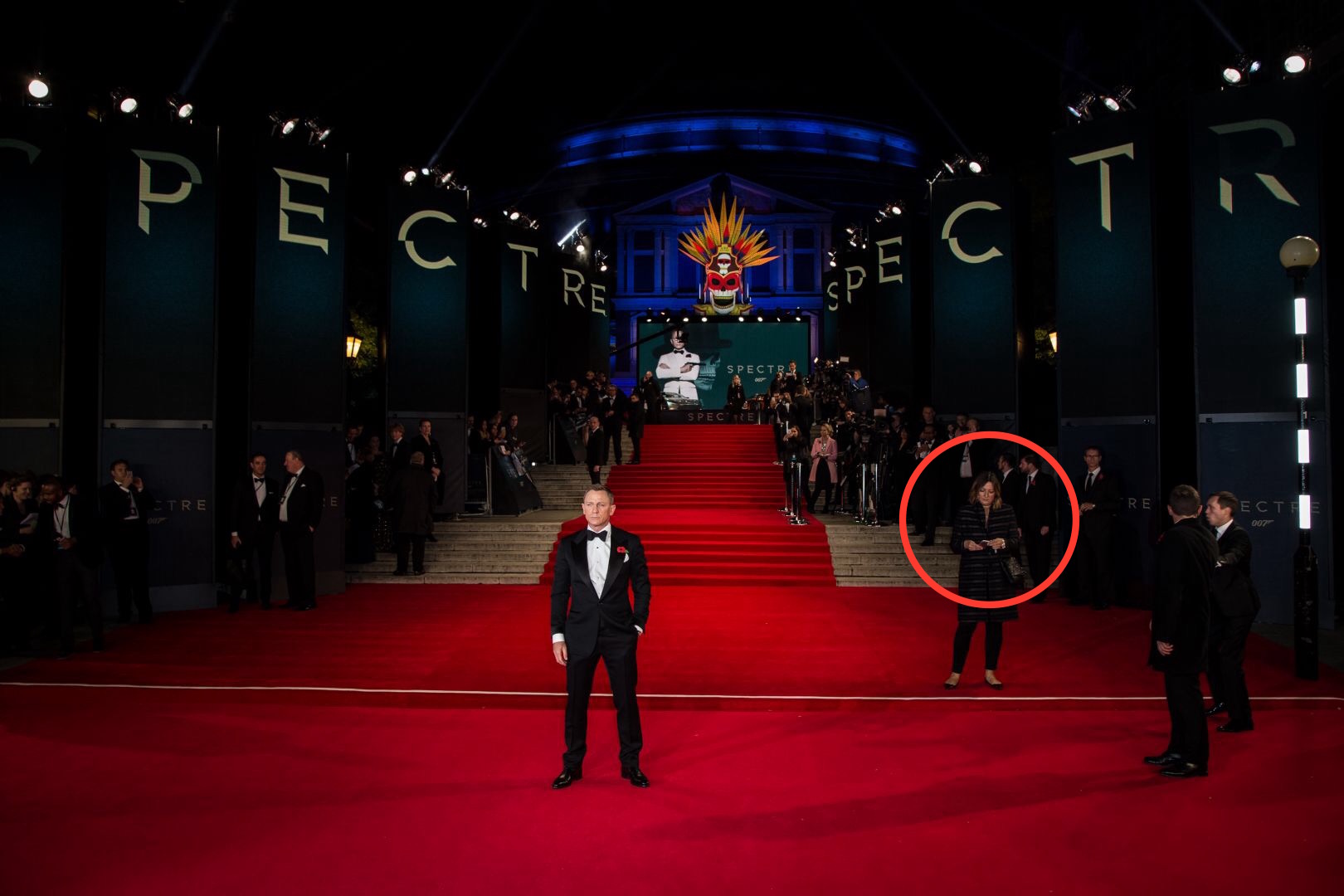
This photo has attracted my attention, even if I didn’t enjoy the movie much.

Wondering what the lady on the right of this picture (which is the left of James Bond) is doing? With all that’s happening at the London premiere of Spectre she is looking at her phone. She has Daniel Craig close to her and the best thing she does is, hmmm, see if there’s any new text waiting. She’s not writing a message. No, she’s just reading, probably. Unless she’s about to push the auto-destruction button.

Age of distraction?

Spectre Premiere, London. Photo: AP

Spectre Premiere, London. Photo: AP

Posted in images, media | Tagged , , | Leave a comment

Publicity stunts

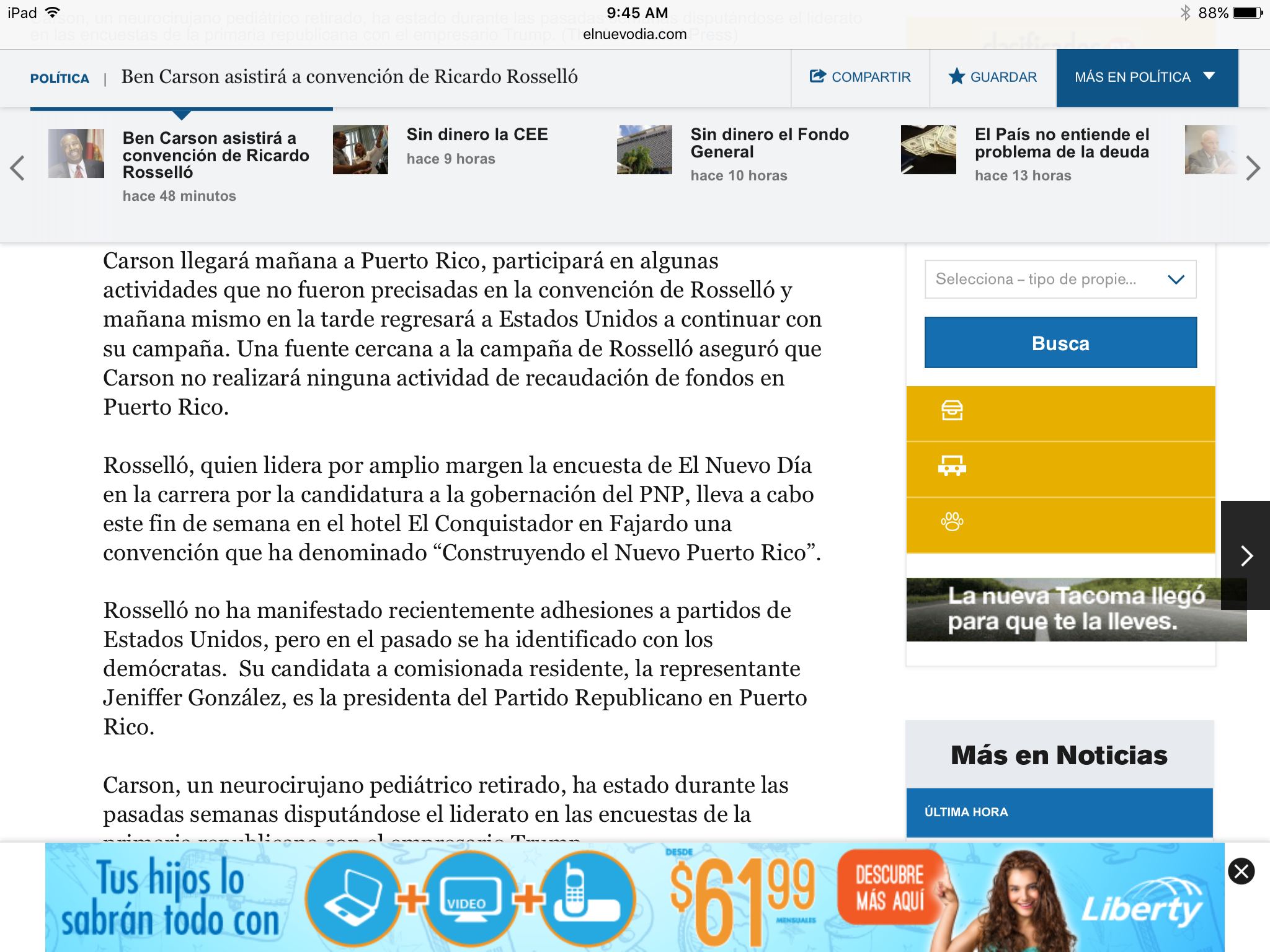
Screenshot by me, CC-Licensed

Screenshot; by me, CC-Licensed / “This window will close in 4 seconds”.

It’s true and tested that publicity is at the core of many business practices. We accept that and, as a public with little to say on this, we passively watch TV shows which have disgracefully increased both the quantity and frequency of ads within and between shows. Well, sometimes it’s not that passively: we fire repeatedly our remotes and rebel to the imposition. Or, increasingly, we resort to premium services —TV networks or Internet-based offerings like Netflix or Hulu to watch shows without interruptions.

Both the music and the TV industries have developed “new” business models which allow for easy and cheap content acquisition and consumption without the usual publicity invasion –or as an advertising expert calls it– pollution.

The Web-based information services, on the other hand, have succumbed to the same old ad-based model applied by TV and magazines with the added consequence of privacy invasion. Magazines and newspapers actually work the model pretty well. They tend to include adds which are tailored to the population that buys the periodical, thus we get ads that reflect our lifestyle, and that are not too invasive: one can always pass forward an ad page or look another way easily.

This is precisely what one must do when, opening a news service webpage, there opens a window stating that it will close in about… 9 or 19 seconds. During which we are hostages of the ad and cannot do anything else. And what about those awful ads that appear somewhere on a page and you have to fight with the small ‘X’ in one corner to close them? Only to find the click actually did open the ad?

It’s the price to pay for a free access to the services, some say. Well, I hate that intrusion and I hate being taken hostage, so I look another way —and I write this.

The fact is that, differently from magazines, on the Web this is an intrusion on privacy, a real abuse. Not only do we find the ad. But often we find that the ad has been tailored ad-hoc after some search of ours. After searching for VPN’s —precisely to increase my privacy— I got ads for VPN’s everywhere. Get the irony?

Watch the documentary series Do Not Track and you’ll find examples of tens of Web tracking services —whom we never granted any permission— which collect data on our every move as soon as we open Facebook, Twitter or our good old online newspaper. Then those services are able to provide Google or Facebook or this-party ad-services with the right info, perfectly tailored to our “needs”. Is this right?

No, it is not.

This invasion produces also some really weird hyper-personalisation effects. Look at this screenshot of Le Monde. I’d expect a French ad, right? Or nothing at all. But no, not even that. A local ad. OMG: Is this the hyperlocal Web? The “local” following me wherever I go?
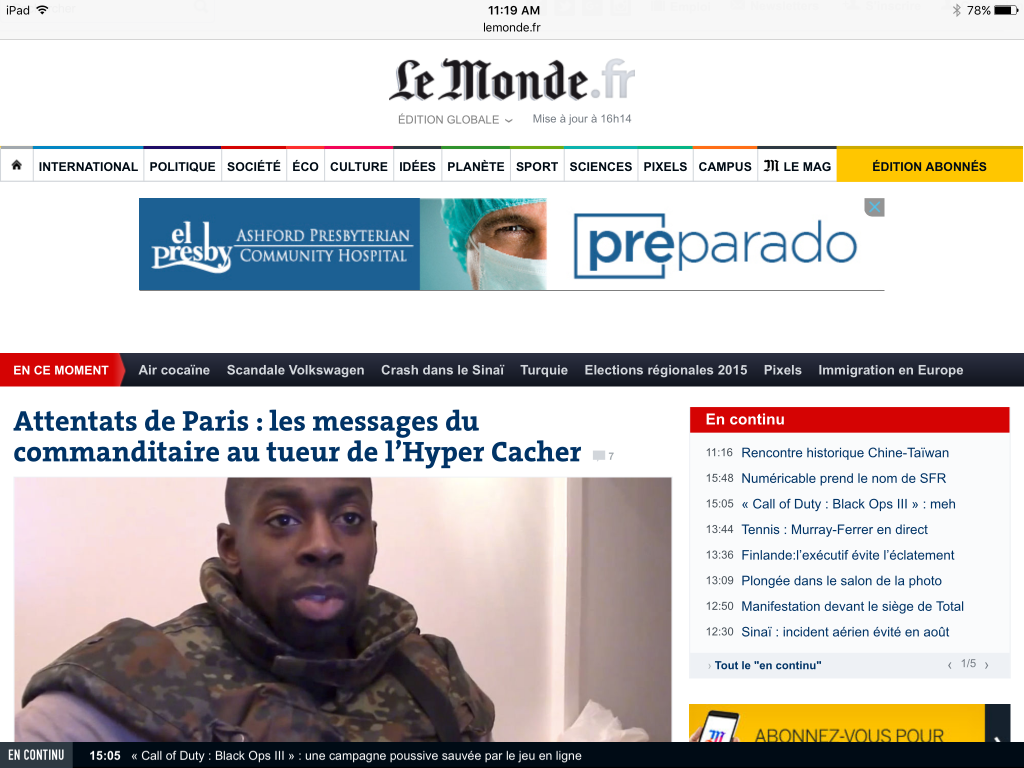
Screenshot by me, CC-Licensed

Screenshot; by me, CC-Licensed // preparado

The next image is even worse, if it were possible. Even while reading the Pravda in Russian I am given the hyperlocalized ad. Shame!! (Well, I don’t read Russian… but shame nonetheless!)
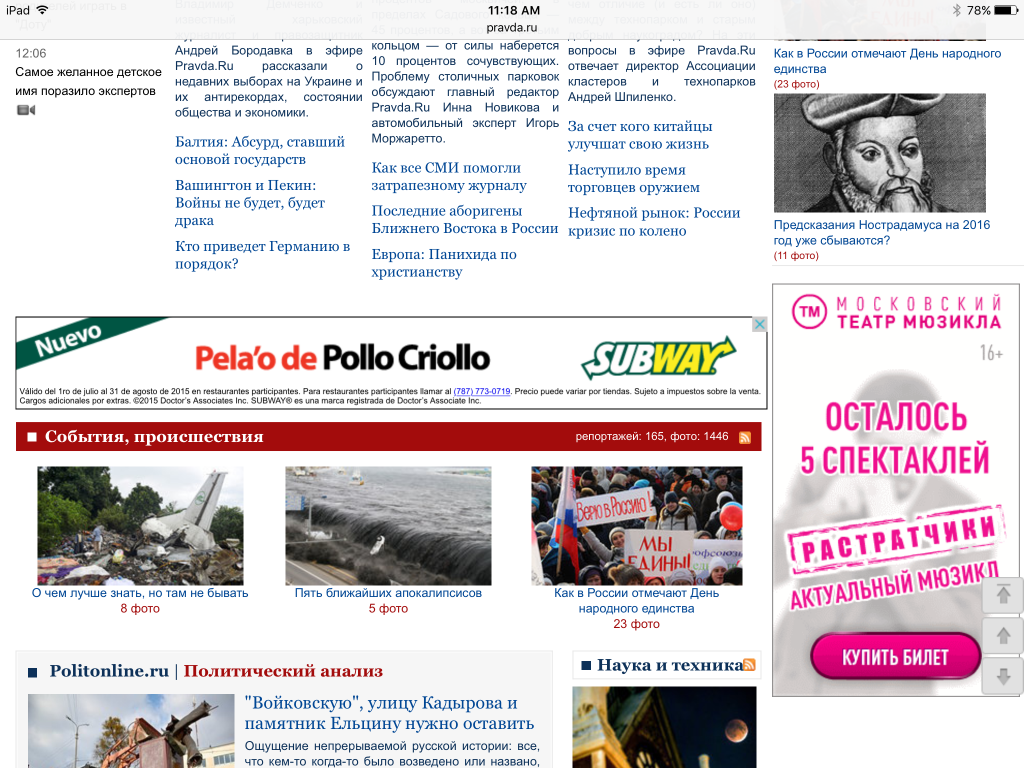
Pravda

Screenshot; by me, CC-Licensed // Puertorussian

Is nobody from the industry rebelling to this? Actually, there is. A Pepsi executive, nonetheless. PepsiCo’s Brad Jakeman, president of the company’s global group, was quoted as saying, “This is a disruption that has happened around us, and we are still talking about 30-second television ads. We fundamentally haven’t changed.” And that seems true, at least to an outsider like me. He speaks of advertising as content polluting, and we certainly don’t have to look far to see those webpages where articles are interrupted with little boxes for ads. Or the “pollution” of the examples I got in the images here. “Can we stop using the term advertising, which is based on this model of polluting [content]?”, he said.

Look at those annoying little rectangular ads at the bottom of a Webpage. They have a small “X” on some corner. Most times, if you try and click on it without precision you get transported to the ad page itself, without any consent. This is vicious. Is it possible the ads industry has not yet devised a better business plan? Must they count on my sloppy finger or mouse precision to have me open a page that I do not want to open? Is it possible that they are still under the influence of the last huge publicity innovation —done by ad-industry outsiders, namely the big Google founders? Haven’t they been able (Mad Man notwithstanding) to create any real XXI-century innovation that not subject us to such abuse?

Contrast this with the classic magazine ad, once more. True, sometimes one can find a full double-page ad. But you can simply go on with another page. Plus, you don’t get localized ads while reading The Pravda.

Well, I began using Firefox’s new Do Not Track feature. Fewer “personalized” ads appear. Some more privacy. For the rest? I look away every single time I get a small windows that says “You can close this after 9 seconds.” I look away for 9 seconds.
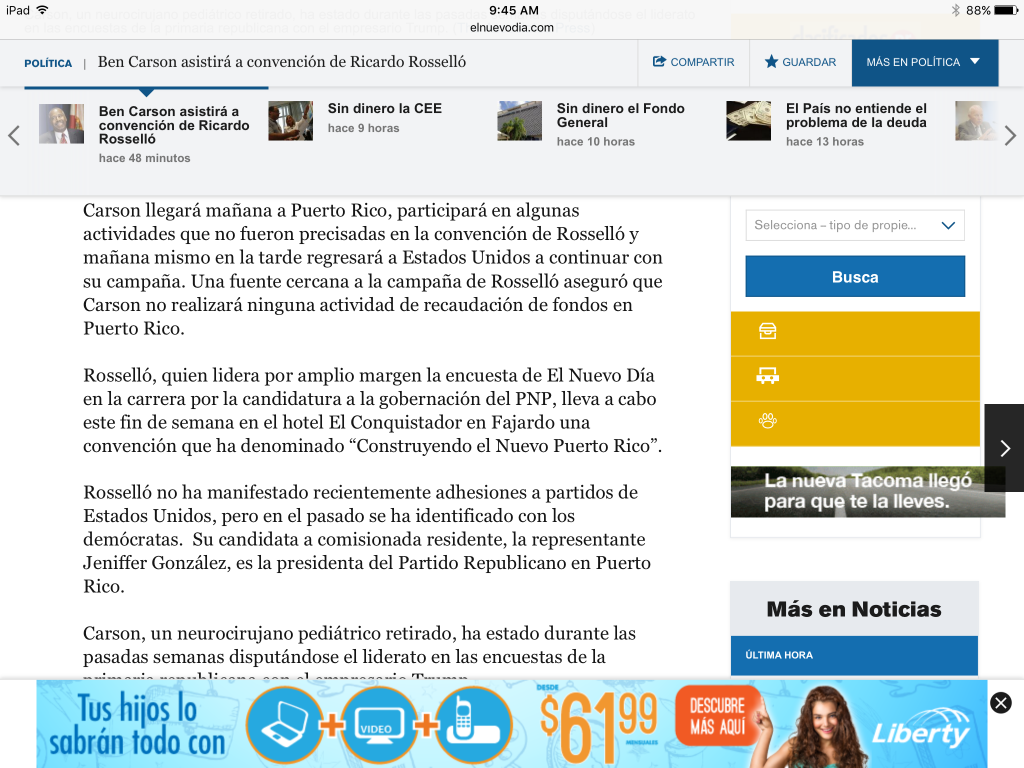
endi

Screenshot; by me, CC-Licensed // Liberty

Again, to quote Jakeman:

…the people who are making it know that I’m going to hate it. Why do I know that? Because they tell me how long I am going to have to endure it — 30 seconds, 20 seconds, 15 seconds. You only have to watch this crap for another 10 seconds and then you are going to get to the content that you really wanted to see. That is a model of polluting content that is not sustainable.
 

Posted in nonsense | Tagged , , , | Leave a comment

Boulevard Voltaire, or The Stupidity of Evil

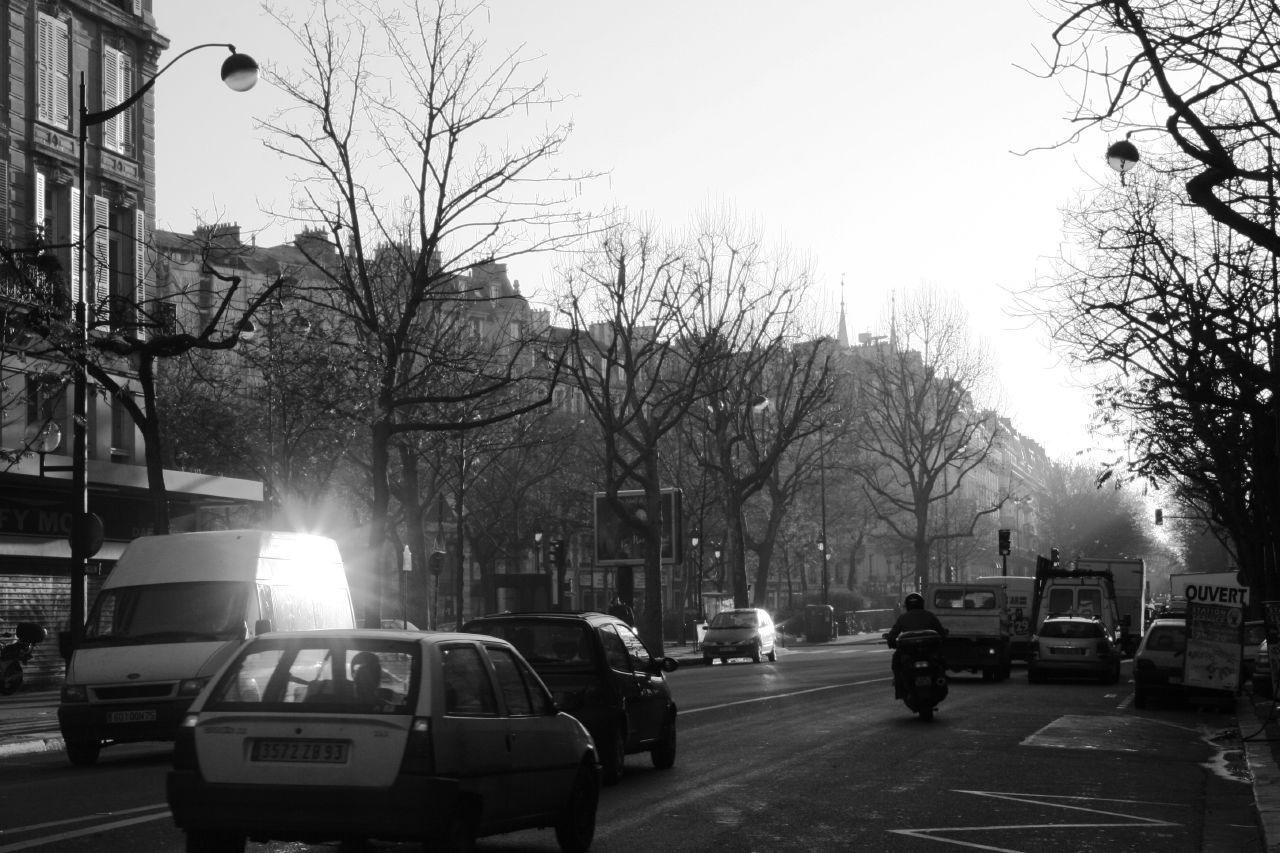
Guillaume Baviere. CC-licensed.

Guillaume Baviere. CC-licensed: Boulevard Voltaire.

I do not want to write down here the Quran’s quotes on the Paris terrorists’ rationale. But there they are, well styled and well quoted, just like a good scholar would do. But this is not a war of religion. Anyhow, reading people’s opinions on the ferocious attacks on Paris, once again, provokes my worst reactions of rage and frustration. We (as humanity) have not learned much.

Have not learned that people find meaning according to their own beliefs. Thus, comments on the terrorist attacks show a humanity: divided, racist, and hypocrite.

Baudelaire has a few verses on this condition, contained within a poem collection quite aptly titled Les fleurs du mal (The Flowers of Evil).

Infatuation, sadism, lust, avarice
possess our souls and drain the body’s force;
we spoonfeed our adorable remorse,
like whores or beggars nourishing their lice.

You know it well, my Reader. This obscene
beast chain-smokes yawning for the guillotine —
you — hypocrite Reader — my double — my brother!

http://fleursdumal.org/poem/099

[English translation: Robert Lowell, from Marthiel & Jackson Matthews, eds., The Flowers of Evil (NY: New Directions, 1963)]


I think that:

  1. These attacks are on people, young mostly, innocent, passers-by. There are Muslims among those killed as well. There’s a number of destroyed families who are just that: destroyed. Yes, this happens everywhere a bomb falls: Iraq, Lybia, Syria, Afghanistan, Lebanon, London. Evil is banal as it is stupid. There’s nothing else to it. So is banal and stupid France’s shocking reply with the bombing of Raqqa, the so-called Islamic State’s capital. You do this and then we do that. It’s still biblical times, folks.
  2. These attacks in more than a way happen against the one land and the people who defined the very idea of freedom of speech. So when some nuts cry that God is great and start shooting, the act itself carries a heavy meaning. It was the same with Charlie Hebdo. This is why #jesuischarlie. Is it a coincidence that the Paris center attacks occurred at or very close to Boulevard Voltaire?
  3. However, as I said, this is not a war of religion; it is just one that uses as mindless zombie-like peons those outcasts (many being French nationals, by the way) who live in those awful banlieus of big cities. ISIS recruits among them, nurtures rancor and hate among them and transform youngsters into kamikazes. It has them believe it’s for God’s sake. But we (ought to) know better.

So, there’s people who say that the media do not pay attention to similar violent incidents when they happen in the Middle East or outside white-man territory. That may be true, but the big media are not humanity nor do they represent humanity.

It is very true, though, the it is our responsibility as westerners to acknowledge the war actions against the Middle East (and further) “we” perpetrated (#notinmyname though): Iraq was a wrong war, but I remember those I discussed with at the time saying that “we” had to attack and liberate that people from Hussein’’s oppression. Same story with Afghanistan. So, who did you vote for, friends?

Also, please don’t quote a miserable dictator like Assad when he says that “France knew yesterday how we in Syria have been living for 5 years”. This is senseless and populist rhetoric.

Same rhetoric coming from the western pure who “protest” and show their indignation with the lyrics of Lennon’s rhetorical Image. They somehow forget impassibly to pay attention to the wording:

Imagine there’s no heaven

No hell below us

Nothing to kill or die for
And no religion too.

Last, US and UK media please, please stop naming “terror” attack what is actually a “terrorist attack”. I am sick equating “terror” with “terrorist”. I love terror movies, for one.

Posted in nonsense | Tagged , | Leave a comment

Great Ideas Syllabus and a Trailer: Inf103.com

Mike Wesch gave me (and I’m sure many others) great vibes with his over-hyped trailer for one of his courses.

So I made one for my Computing Fundamentals course, which has gone through a redesign process based on syndication, reclaiming blogging and connected-course-ism.

The Web-living part of the course, INF103.com, having borrowed all I could from the ideas of people like Jim Groom, Alan Levine, Gardner Campbell et al., is also heavily inspired from the Connected Courses philosophy of the Digital Media & Learning research hub.

Now that we are approaching Thanksgiving, let me thank my students of the two sections I am teaching now: #inf1031 and #inf1038. You can follow our conversations on Twitter through the two previous links.

Posted in computing, education, literacy | Tagged , , , , | Leave a comment