Doctopus makes it easier for teachers to share, organize, and assess student work in Google Drive.
Its tentacles copy and “hand out” Drive files to a roster of students, giving teachers full control over starter template, sharing configuration, folder organization and file naming, as well as full visibility over all work in progress — including the ability to bulk revoke and revert student editing rights.
Bridgy is a service that pulls comments, likes, and reshares on social networks back to your web site. You can also use it to post to social networks – or comment, like, reshare, or even RSVP – from your own web site.
Posted from Diigo. The rest of my favorite links are here.
A terrific flashback from my own teenager era. Suddenly, when talking with friend John on old TV series (he noticed we’ve come back to TV series as in the 70’s), I googled “UFO series” because I suddenly remembered of a series I adored when I was a kid. It was a series on UFOs, so that’s what I searched for. And this is what I found, thanks to the open magik of the Web. Everything about the UFO series!!
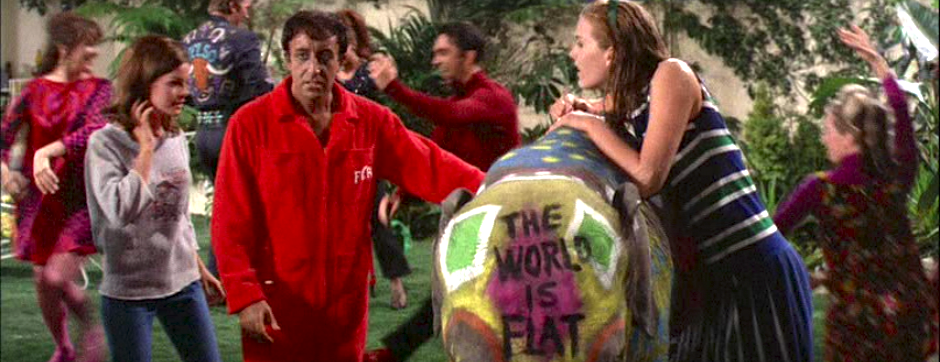
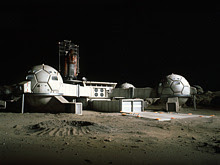
UFO is a 1970 British television science fiction series about an alien invasion of Earth, created by Gerry Anderson and Sylvia Anderson with Reg Hill, and produced by the Andersons and Lew Grade’s Century 21 Productions for Grade’s ITC Entertainment company.
UFO first aired in the UK and Canada in 1970 and in US syndication over the next two years. In all, 26 episodes, including the pilot, were filmed over the course of more than a year, with a five-month production break caused by the closure of the MGM-British Studios in Borehamwood, where the show was initially made.
a secret organisation called SHADO, the Supreme Headquarters, Alien Defence Organisation, is established. Operating under the cover (as well as under the premises) of the Harlington-Straker Studios movie studio in England, SHADO is headed by Commander Edward Straker (Ed Bishop), a former United States Air Force colonel and astronaut, who poses as the studio’s chief executive.
Last, I think YouTube has almost all the episodes. Enjoy, and thank the Open Web!
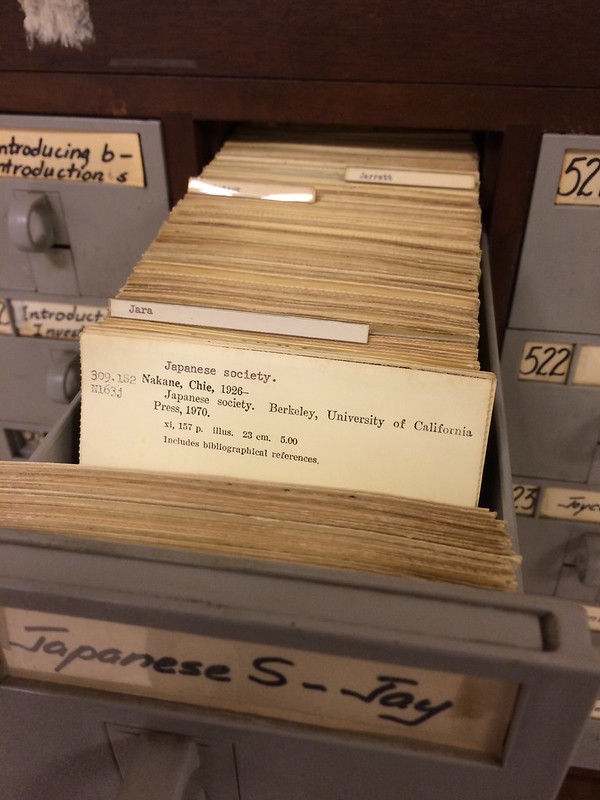
Today, after a pleasant meeting at UPR’s Graduate School of Information and Technology Science, just above the library, my attention was caught by some strange furniture in the shape of drawers.
[Photo by me. CC Licence BY-NC-SA]
Yes! They are drawers containing the famed catalogue cards which I used to browse when there was no Web. Little did we know of what was there to miss when it was decreed they had to disappear in many libraries!!
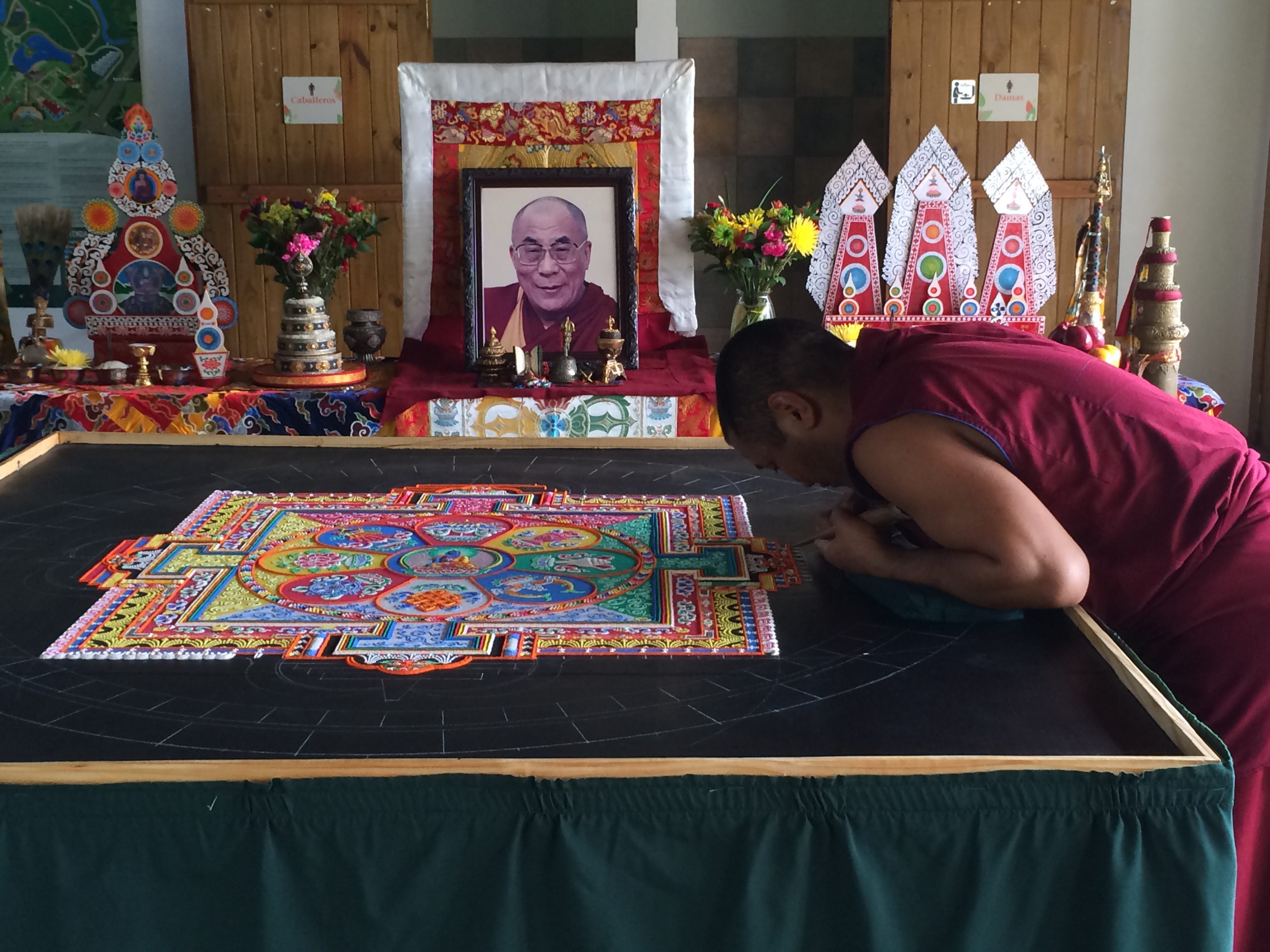
[No spoilers ahead] One episode of the new season of House of Cards has some Tibetan monks make a beautiful colored-sand mandala in the White House. Like all good mandalas (and puzzles, by the way) a mandala -as a pure exercise of meditation- is to be swept away as soon as it is finished. Volatility of all that is created? Non-attachment to stuff? Finiteness of human creations? OK, sure enough, it’s more or less old stuff. The novelty comes because one night the President comes back home and he notices the monks (and the mandala) aren’t there.
Photo by me. License cc-BY-NC-SA.
Gone. So, the metaphor gets more powerful, see? Power, and volatility, and humanness. All finite and gone with the wind. But then, there’s another big, interesting side. Frank and Claire discuss on their bearings as a couple, and he comes out mentioning that they created the life they wanted.
Exactly. Life as a product of life. Life as a creation of our own mind and work and our most intimate ourselves is nothing but a creation made by… ourselves. A creation -as volatile as any other- and as personal and subjective as possible. I mean, we do not “only” give meaning to all we think and do, but we create that meaning and project it onto everything. Powerful metaphors for a simple tv series, eh?
Now, I’m also thinking that while doing their meditation with mechanical art (perhaps even our ideas of creativity and inspiration are constructed and mechanical, seem to suggest the monks), they might as well dedicate that time and concentration and energy to solving (mechanically) some of the greatest problems of mankind, like many computers do.
The roads on the Internets are infinite. A simple question lingered on myself, which Hilda promptly answered. Were there bullfight arenas in Puerto Rico in the past? With real corridas? –Yes, she said. I remember one in Isla Verde, she reminded.
An easy googling produced the evidence. Indeed at Isla Verde (not far from the San Juan airport) there stood one. Viva Internet!